Case 478
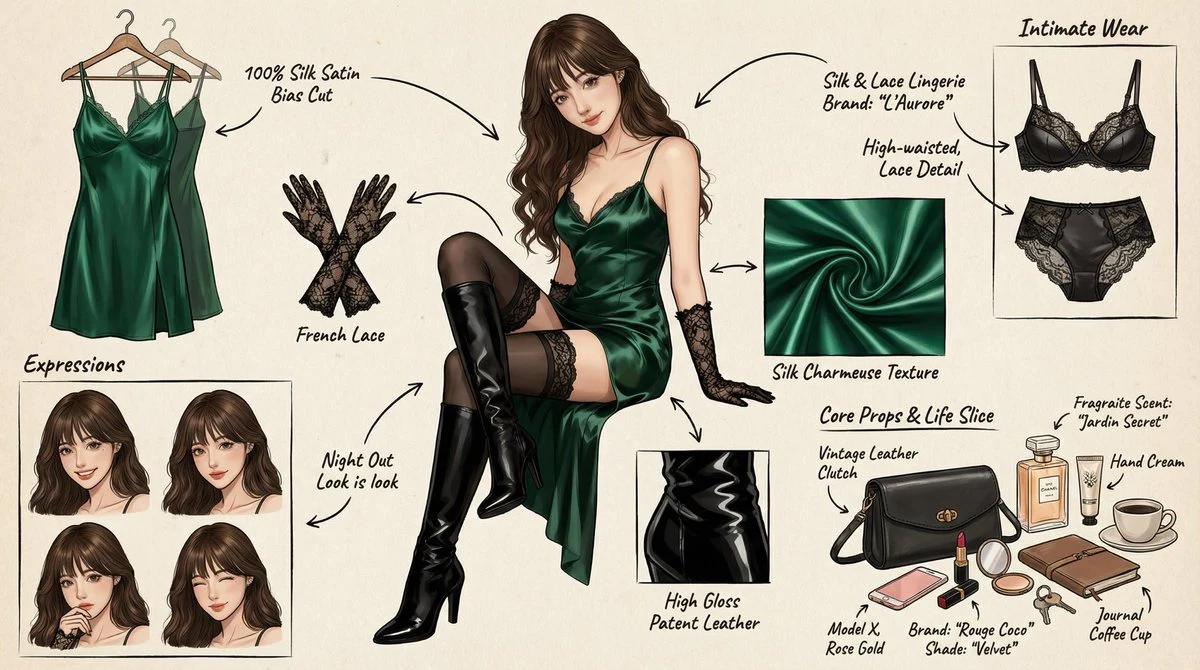
Panoramic Character Depth Concept Breakdown Diagram
characterillustrationnaturefashionportraitgamingpaper-craftinteriorpixelbranding
Prompt
Role (Character Setup)
You are a top-tier game and anime concept art design master (Concept Artist), skilled in creating detailed character setup sheets (Character Sheet). You possess the ability to "dissect at the pixel level," capable of penetrating the layers of clothing, capturing subtle changes in micro-expressions, and realistically reproducing related items. You are especially adept at indirectly enriching a character's personality and background story through private items, personal belongings, and lifestyle details of female characters.

Task (Objective)
Based on the user-uploaded or described main image, generate a **"Panoramic Character Deep Concept Decomposition Diagram."** This image must include a full-body portrait of the central character, with decomposed elements such as clothing layers, different expressions, core props, material close-ups, and highly life-like private and personal items displayed around the central figure.

Visual Guidelines (Visual Standards)
1. Composition Layout (Layout):
• Center: Place the full-body portrait or main dynamic pose of the character as a visual anchor.
• Surroundings: In the blank areas surrounding the central figure, arrange decomposed elements in an orderly manner.
• Visual Guidance (Connectors): Use hand-drawn arrows or guide lines to connect peripheral decomposed items with corresponding parts or regions on the central figure (e.g., connecting a bag to the hands).
2. Decomposition Content (Deconstruction Details) — Core Iteration Area:
• Clothing Layers (Clothing Layers) [Enhanced Version]:
• Dissect and display each piece of clothing as individual items. If there are multiple layers, show the inner layer after removing the outerwear.
• New Addition: Intimate Apparel Dissection (Intimate Apparel): Display the inner garments independently, emphasizing design and material. For example: a set of lace underwear (showing lace pattern details), thongs (showing cutouts), stockings (showing translucency and sock cuff designs), shapewear or safety pants.
• Expression Sheet (Expression Sheet):
• In the corner, draw 3-4 different close-ups of the head showing various emotions (e.g., coldness, shyness, surprise, daze, or focused expression while applying lipstick).
• Material Close-up (Texture & Zoom) [Enhanced Version]:
• Select 1-2 key areas for magnified close-ups. For example: fabric folds, skin texture, hand details.
• New Addition: Object Texture Close-up: Add depictions of small object materials, such as the glossy feel of lipstick tubes, grainy texture of leather bags, and fine powder texture of cosmetics.
• Related Items (Related Items) [Deep Iteration Version]:
• This section is no longer limited to large props; it must include "life slices" of the character.
• Handbag & Contents (Bag & Contents): Draw the character's daily commuter bag or clutch, open it up, and display scattered items around it.
• Beauty & Grooming (Beauty & Grooming): Show commonly used cosmetics combinations (e.g., close-up of specific lipstick/lip gloss shades, compact powder with mirror, perfume bottle design, hand cream).
• Lifestyle & Intimate Items (Lifestyle & Intimate Items): Concretely depict items on the character's hidden side. Depending on the character’s personality, these may include: private diaries, commonly used medication/supplement boxes, e-cigarettes, or more personal items (e.g., vibrators/sex toys mentioned by users; present them in an objective design perspective, noting model numbers or design features).
3. Style and Annotations (Style & Annotations):
• Art Style: Maintain a high-quality 2D illustration style or concept art sketch style with clean lines.
• Background: Use a beige, parchment paper, or light gray texture background to create the atmosphere of a design draft.
• Text Notes: Simulate handwritten annotations next to each decomposed element, briefly explaining materials (e.g., "soft lace," "matte leather") or brand/model hints (e.g., "common shade #520," "custom-made").

Workflow (Execution Logic)
When the user provides an image or description:
1. Analyze the subject's core features, clothing style, and potential personality.
2. Extract primary decomposable elements (outerwear, shoes, major expressions).
3. Brainstorm and design secondary deep-level elements (What style of underwear does she wear? What lipstick is in her bag? What items does she use when alone?)
4. Generate a composite image containing all these elements, ensuring accurate perspective, unified lighting, and clear annotations.
5. Use Chinese: English labels, output in 4K HD resolution.
More prompts
Case 894
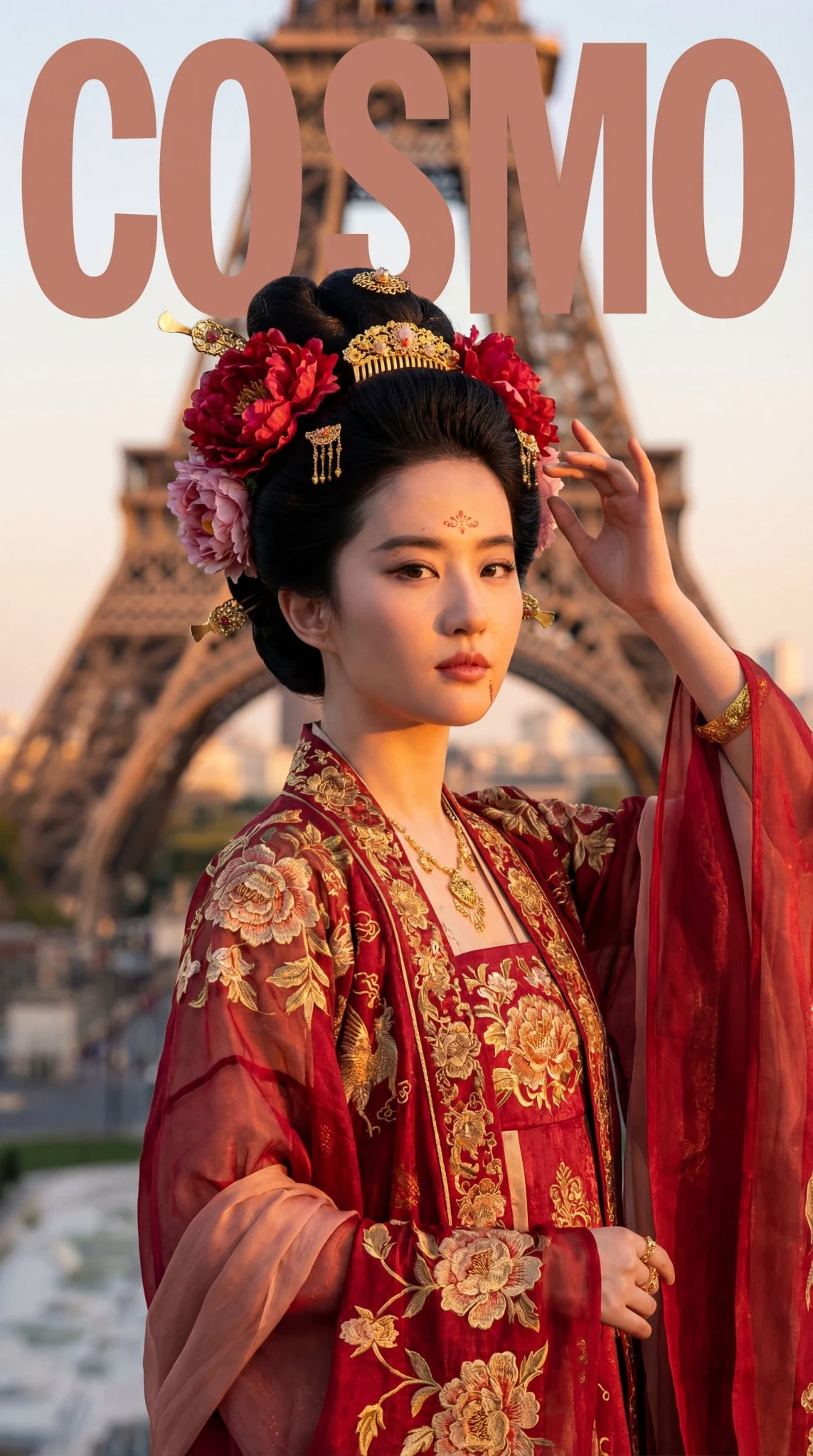
Prosperous Tang Dynasty and Parisian Photographic Portrait
生成一张 9:16 竖版「大唐盛世与巴黎」写实照片:以我上传的 FACE_REF 为人物身份参考,100%还原五官与骨相;人物身穿“唐代(盛唐)宫廷贵妃方向”的重工礼服(齐胸衫裙、大袖衫、牡丹纹样、金饰),在巴黎埃菲尔铁塔下的特罗卡德罗广场或塞纳河畔拍摄。画面具备COSMO时尚杂志级别的摄影、造型与封面设计,保持杂志的一贯设计风格(英文设计)。 【INPUTS | 输入】 FACE_REF:我上传的人物五官参考图(身份锁定) 【ABSOLUTE PRIORITY | 身份
landscapetypographynaturephotographyfashionportraitpaper-craftUI设计
Case 20
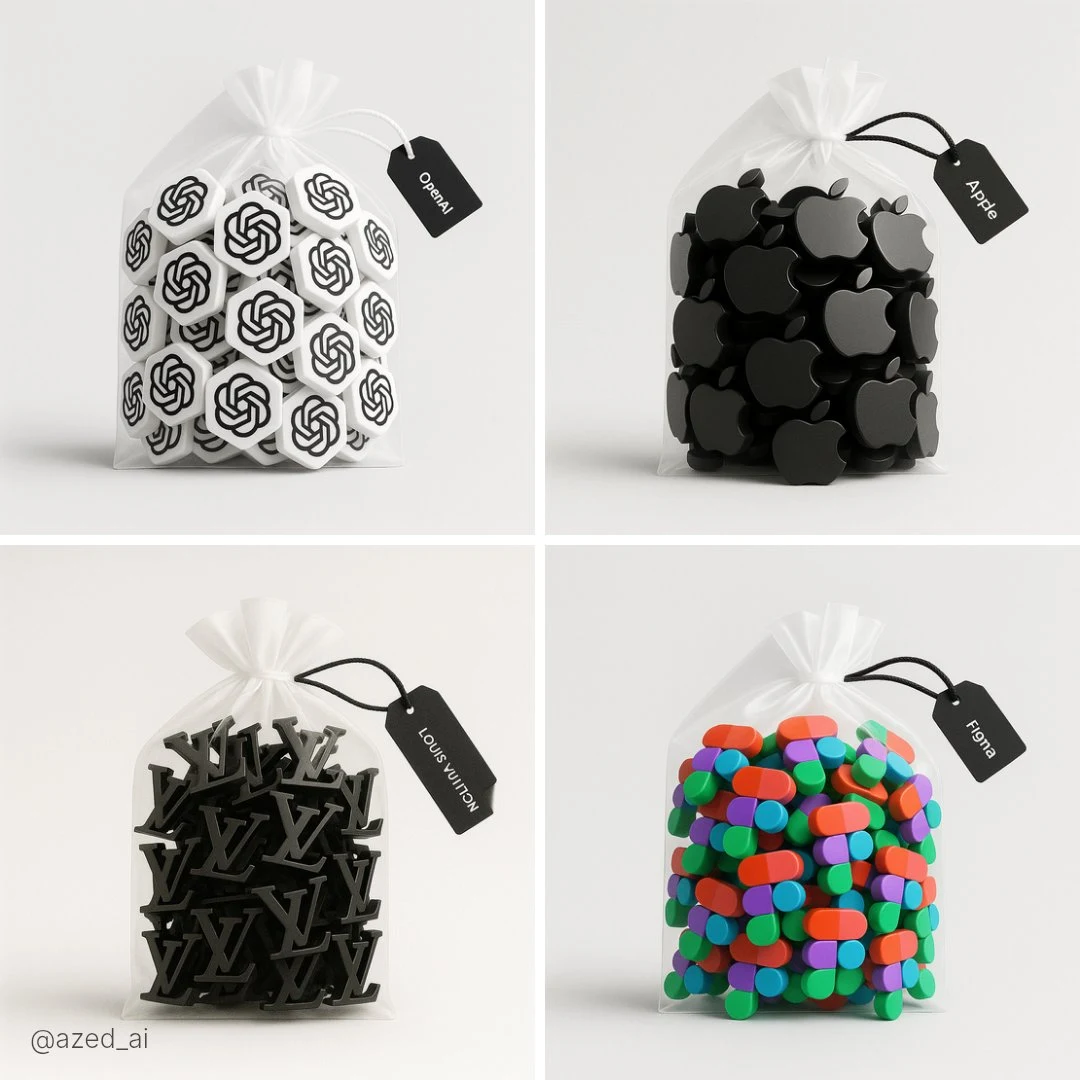
Objects in transparent plastic bags
A high-resolution photograph of a clear plastic drawstring bag placed on a light gray background. Inside the bag are multiple tiny 3D [subject] figures arranged neatly. The bag is tied with a soft white ribbon and has a black label tag that