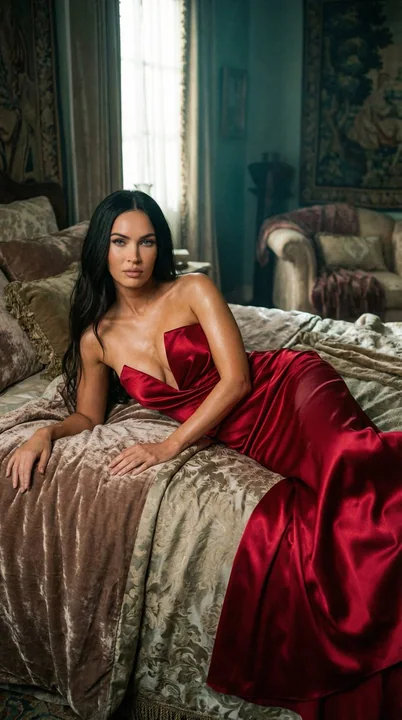
Case 1111
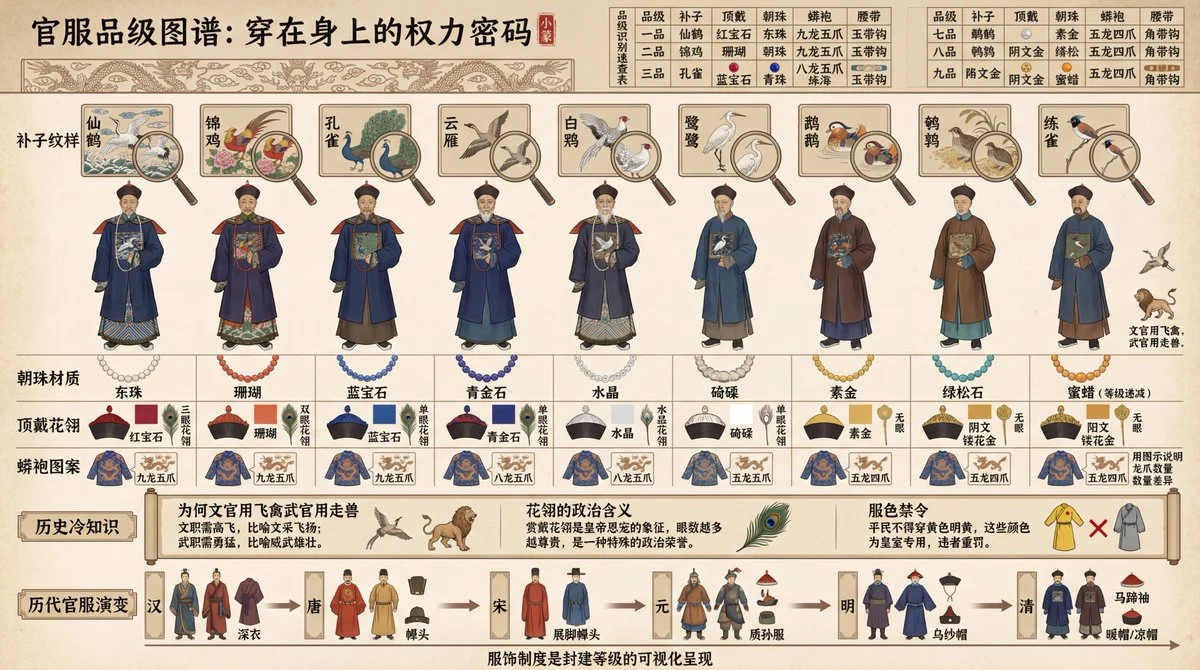
Ancient Chinese Official Rank Clothing Chart
illustrationtypographynatureportraitinfographic
Prompt
Create a historical infographic in the style of a "visual breakdown of the ancient Chinese official rank system," with a 16:9 horizontal composition. Use aesthetics inspired by classical Chinese courtly illustrations and the artistic style of ancient book illustrations. The image should display the differences in Qing Dynasty officials' robes, arranged from left to right according to rank: nine figures of officials from first to ninth rank. Each figure is accompanied above with a detailed ink painting annotation of "the patch pattern" (first rank: crane; second rank: golden pheasant; third rank: peacock... ninth rank: quail; civil officials wear birds, military officials wear beasts), and the embroidery details are highlighted with a magnifying glass. Below each figure, annotations should include "material of the neck beads" (first rank: East pearl; second rank: coral; third rank: sapphire... decreasing in rank), "headgear and plume" (red gemstone/coral/sapphire/crystal, distinguished by color blocks), and "dragon robe patterns" (nine dragons/five claws/four claws, illustrated with diagrams showing differences in the number of dragon claws). At the top of the image is a "quick reference table for ranks": a table comparing the differences among nine ranks across five dimensions: patch pattern, headgear, neck beads, dragon robe, and sash. Each cell should be annotated with small icons and text. Below the main illustration is a section titled "Historical Cold Knowledge," which includes annotations such as "why civil officials wear birds and military officials wear beasts" (civil officials need to soar high; military officials need to be brave), "the political significance of plumes" (wearing a plume was an imperial favor), and "clothing color restrictions" (commoners are forbidden from wearing yellow). At the bottom, include a timeline showing the evolution of official robes through different dynasties: Han, Tang, Song, Yuan, Ming, and Qing. All text should be in Chinese; the top title should use small seal script: "Official Robe Rank Chart: The Power Code Worn on the Body," and at the bottom, annotate with "The clothing system is a visual representation of feudal hierarchy." Use traditional colors from official robes. Overall, it should present historical systems and costume culture, suitable for history education and cultural research.
More prompts
Case 10721
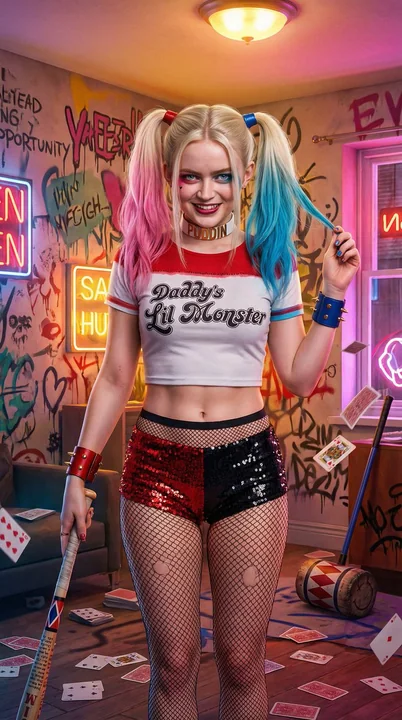
Sadie Sink Enchanting Version of the Joker Girl Photo
{ "subject": { "desc": "Realistic voluptuous hourglass Sadie Sink in detailed Harley Quinn cosplay, long blonde hair in high pigtails with pink and blue dyed tips, fair natural skin texture, dramatic Harley makeup with pale foundation, blac
霓虹写真丰满小丑女萨迪
Case 14877
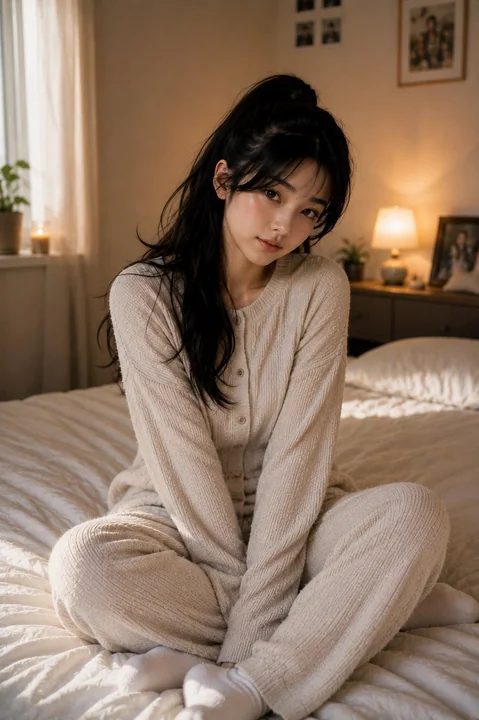
East Asian Delicate Girl Lifestyle Portrait in the Bedroom
Ultra-photorealistic portrait of a beautiful young East Asian woman with long glossy black hair styled in a loose high ponytail, soft wispy bangs, fair luminous skin, delicate feminine features, natural makeup, and a calm gentle expression.