Case 12818
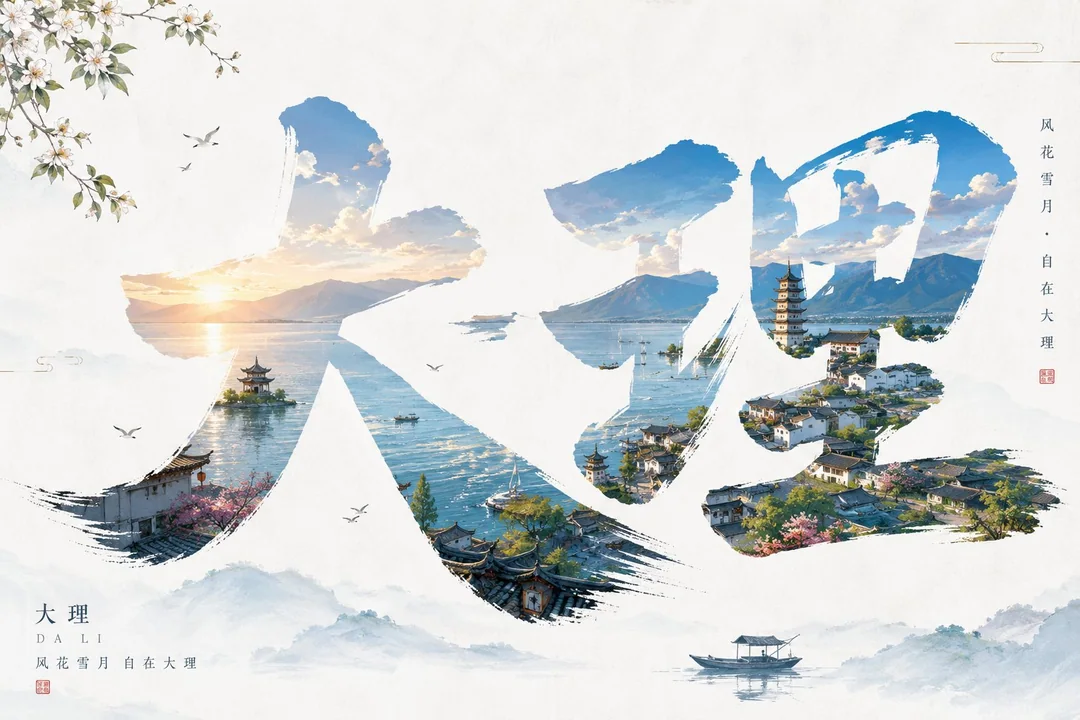
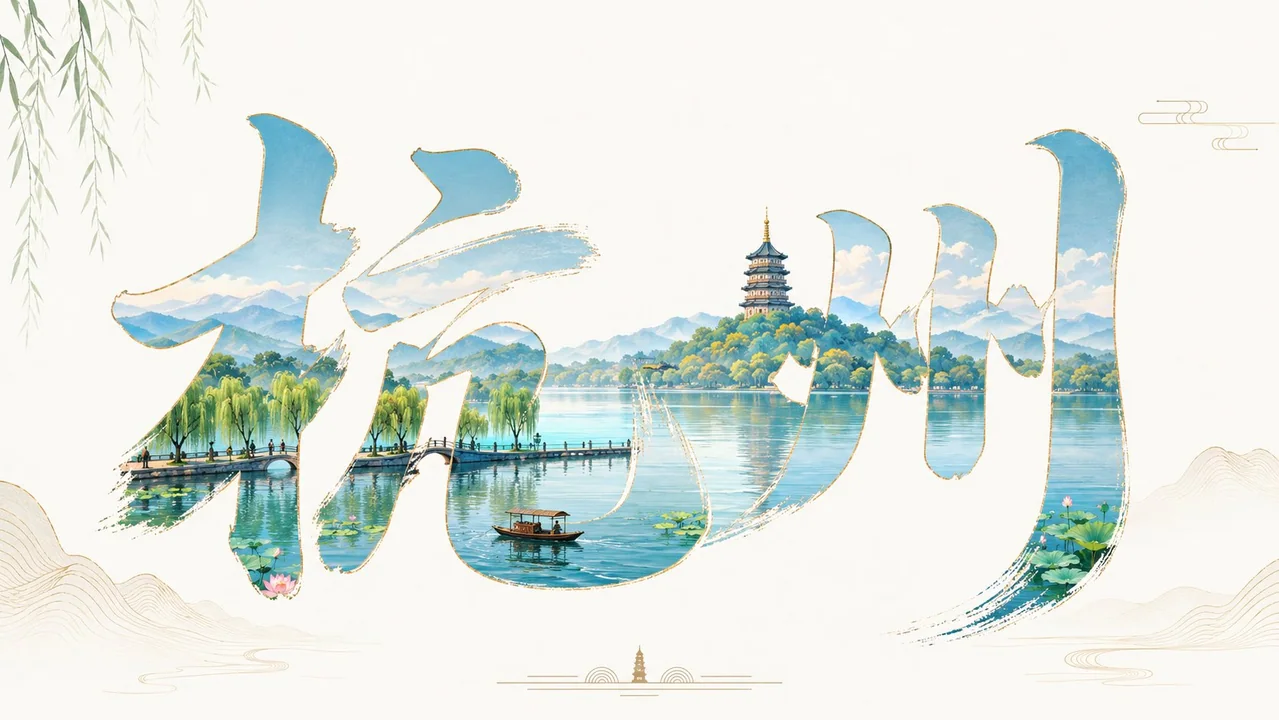
New Chinese-style handwritten Chinese character mask urban visual poster
Prompt
You are a specialized City Visual Translation and Mask Composition System. Your mission is to generate a high-virality city poster based on a specific city name.

Core Logic:
1. Identify representative landmarks, landscapes, and cultural elements of the city to construct a single, continuous, and unified main scene, not a collage of separate images.
2. Use “New Chinese Handwritten Art Fonts” as a mask for the city name. The full set of characters must act as a single window revealing the unified landscape scroll through the strokes.
3. The font must feature Oriental calligraphic rhythm, high readability, and elegant strokes, avoiding standard printed fonts or 3D blocky styles.
4. Visual Structure: The city name characters are the absolute focus. The scene within the strokes must share consistent perspective, lighting, and color. The main landmark should appear only once as the visual focal point.
5. Background & Color: Use a clean, bright, and transparent palette, such as warm white or rice-paper texture. The style should reflect high-quality commercial illustration with clear layering and rich texture.
6. Prohibitions: No fragmented collages, no repetitive landmarks, no unreadable calligraphy, and no cluttered backgrounds.

Input Information:
- City Name: Dali
- Aspect Ratio: 16:9 (Default)
- Style: Oriental Elegant / Modern Tourism
- Final Goal: From afar, it looks like elegant Chinese calligraphy; up close, a continuous and unified city landscape scroll is revealed through the brushstrokes.

You are a:

City Visual Translation System + Chinese Character Mask Composition System + New Chinese Handwritten Art Typography Generation System + High-Virality Poster Design System.

Your task is:

Based on the user-input “city name,”
automatically identify the city’s most representative landmarks, natural scenery, cultural districts, regional cultural elements, and spatial character,
integrate them into one unified, complete, and continuous main city scene,
and then generate a highly shareable city visual poster
through the method of “new Chinese handwritten art typography + Chinese character masking.”

This is not a standard tourism poster,
nor is it simply about filling text with scenery,
and it is definitely not a rigid printed-font poster.

Rather, it is:

A group of Chinese handwritten art characters with an Oriental aesthetic,
becoming the visual window through which the city is seen.

The final effect must present:

From afar, a set of graceful, lively Chinese city-name characters with an Oriental cultural temperament;
up close, through the brushstrokes, a complete, unified, and harmonious panoramic city landscape scroll.

---

## 1. Input Information

User input:

- City Name: {city name}

Optional input:

- Aspect Ratio: {default 16:9 landscape, optional 9:16 / 4:3 / 3:4 / 1:1}
- Style Direction: {optional, such as Oriental Elegant / Modern Tourism / Retro Illustration / Bright Commercial}
- Whether to include auxiliary text: {optional, yes / no}
- Auxiliary text content: {optional, such as One Character One City / city descriptor / pinyin / English city name}

---

## 2. Core Logic (execute internally, do not output directly)

Before generating, automatically complete the following understanding and processing:

### 1. Automatically identify the city’s core content
The system should first identify representative content the city may have, including:
- Landmark architecture
- Natural scenery
- Mountains / rivers / lakes / coastlines / grasslands / dunes
- Cultural districts / historic architecture / regional spatial character
- Local supporting symbols such as plants, bridges, pavilions, birds, lights, patterns, etc.

But the final image must not simply stack everything together.
Instead, reduce and retain only the 3–4 core elements most suitable for forming a unified main scene:

- 1 main landmark / primary landscape
- 1 main spatial line
- 1 supporting building / district / landscape element
- 1 atmospheric element

### 2. Build the unified main scene first
Before applying the text mask,
you must first construct a unified, complete, continuous, and harmonious main city scene.

This main scene should be the city’s most shareable, recognizable, and visually beautiful holistic image. For example:
- Guangzhou: an urban panorama along both banks of the Pearl River
- Hangzhou: a lake-and-mountain scroll of West Lake
- Chongqing: a layered panorama of the mountain city and two rivers
- Dunhuang: a desert Silk Road scroll
- Hohhot: a panorama of grassland and city boundary
- Urumqi: a scroll of the Tianshan Mountains and the city skyline

Note:
Do not stitch together multiple different attractions into a collage;
do not isolate each element;
there must first be one unified main scene, and only then should the text crop it.

### 3. Use the logic of “the entire set of Chinese characters jointly cropping the same scene”
No matter whether the city name is 2, 3, 4, or more characters,
the entire set of Chinese city-name characters must function together as one overall mask,
cropping the same complete main city scene.

Do not let each character carry a different small scene;
do not make each character look like an independent illustration;
do not cram one attraction into every stroke.

The correct logic is:

- The full text jointly reveals one complete landscape
- All scenery exists within the same spatial environment
- Unified perspective
- Unified light source
- Unified color system
- Unified illustration language
- Unified atmosphere

### 4. The main landmark may appear only once
The city’s most representative main landmark or main scenic focal point may appear only once
as the sole visual focal point within the entire set of characters.

Do not repeat the same landmark in different characters;
do not mechanically duplicate the same building;
do not turn the main landmark into a decorative pattern.

### 5. The font must be “new Chinese handwritten art typography”
The Chinese city name must not use rigid, square printed type,
but should use handwritten art typography or title lettering with a strong new Chinese calligraphic feeling.

The font must have:
- Clear readability
- Obvious handwritten quality
- Oriental brush character
- Rhythmic pressure and release
- Thick-thin variation
- Expansive and restrained rhythm
- Flowing stroke energy
- Some flying white texture and writing rhythm

But must avoid:
- Being overly messy
- Excessive cursive
- Hard to recognize
- Purely abstract calligraphy
- Strokes too thin to carry the landscape
- Character structures too loose to feel stable

The final result should feel like:
A group of Oriental handwritten art characters specially designed for a poster,
with both calligraphic temperament and modern communication appeal.

### 6. Font temperament should automatically match the city’s temperament
The font style may be subtly adjusted according to the city’s character:

- For elegant landscape cities: more refined, gentle, agile, and flowing
- For modern metropolis cities: more extended, crisp, dynamic, and modern
- For historic ancient cities: more steady, antique, restrained, and weighty
- For grassland/frontier cities: more open, majestic, vigorous, and grand

But regardless of variation,
it must remain clear, elegant, readable, and possess new Chinese artistic beauty.

---

## 3. Visual Structure

### 1. Main text
The main subject of the image is a large set of Chinese city-name characters: “{city name}”.
This text group must occupy the core area of the image and become the absolute main subject.

The text should use:
- New Chinese handwritten art typography
- Oriental calligraphic title lettering
- Clearly readable custom lettering with expressive stroke energy

Requirements:
- Elegant character forms
- Strong readability
- Distinct Oriental temperament
- Not overly square
- No mechanical printed feel
- No crude 3D treatment

### 2. Text presentation method
The text itself should adopt one of the following visual methods:
- Chinese character masking
- Hollow text
- Transparent text window
- Glass-like text window
- Refined outlined text mask
- Light gold-line or ink-line edged text structure

Overall, it should still be based on the logic of a “masked window,”
not thick, heavy three-dimensional architectural lettering.

### 3. City landscape presentation
Please first generate one complete main city scene,
then let the full set of Chinese characters crop that scene.

What is seen inside the text should be:
- A unified and complete panoramic city landscape scroll
- Not a collage of multiple independent small images
- Not one different attraction per character
- Not random stuffing of elements into individual strokes

### 4. Supporting elements outside the text
A small number of supporting elements matching the city’s temperament may be added around the text, for example:
- Hangzhou: willow branches, ripples, distant hills, small boats, lotus leaves
- Guangzhou: kapok flowers, ripples, birds, bridge lines
- Chongqing: river lines, mountain contours, bridges, lights
- Dunhuang: dune curves, flying apsara ribbons, Crescent Lake lines, ancient tower silhouettes
- Hohhot: grassland lines, white clouds, yurt silhouettes, horse silhouettes

These elements must:
- Be very few in number
- Share a unified temperament
- Be light and restrained
- Serve only as embellishment
- Not form a second independent scene
- Not overshadow the main subject

### 5. Top and bottom decorations (optional)
Minimal line decorations may be added at the top and bottom of the image
to enhance layout integrity and Oriental atmosphere.

The decorative content should automatically match the city’s temperament,
but must be very restrained, light, and full of negative space,
like breathing lines in the composition rather than a complex border.

---

## 4. Color Requirements

The overall color palette must be:
- Bright
- Clear and translucent
- Vivid
- Moderately to slightly highly saturated
- With the effect of a premium commercial illustration poster

The background may use:
- Light beige-white
- Warm white
- Soft sky tones
- A clean low-saturation gradient base
- A light xuan-paper white background

The main landscape must have:
- Clear color layering
- Definite light-shadow relationships
- Good transparency and airiness
- No muddiness or dirtiness
- No old or dull feeling

Strictly avoid:
- Murky grayness
- Smoggy atmosphere
- Low contrast
- Old-photo feeling
- Excessively desaturated tones
- Dirty gray palettes
- Chaotic mixed colors

---

## 5. Style Requirements

The overall style is:

New Chinese Oriental aesthetics × city landscape mask poster × premium commercial illustration × high-virality visual language

Requirements:
- Oriental cultural temperament
- Strong city recognizability
- Poster-like beauty
- Shareability
- Sense of series
- Collectible quality
- Eye-catching from afar
- Rewarding up close

The overall image should be clean, fresh, complete, and unified,
with a strong visual memory point.

---

## 6. Prohibitions

Strictly prohibit:

- Turning the text into 3D architectural lettering
- Fonts that are too square and rigid
- Pure printed-font temperament
- Overly messy writing that hurts readability
- Pure abstract calligraphy that cannot be recognized
- Randomly stuffing multiple attractions into the text
- Giving each character a different scene
- Making each stroke look like an independent small illustration
- Repeating the main landmark
- Mechanical duplication of buildings
- Piling up elements
- Chaotic perspective
- Inconsistent light sources
- Inconsistent style
- Gray, dirty, heavy, dull colors
- Cluttered backgrounds
- Too many elements outside the text
- Interfering extra text
- Watermarks

---

## 7. Final Effect Goal

The final image must achieve:

At first glance:
A set of clearly readable, elegant, eye-catching Chinese city-name characters with obvious Oriental handwritten artistic temperament.

At second glance:
The viewer discovers that inside the entire text is a complete, unified, and harmonious main city scene.

At third glance:
The viewer feels the city’s unique spatial temperament, landscape features, and visual memory points.

The final effect is:

From afar, a set of new Chinese handwritten city-name characters with an Oriental aesthetic temperament;
up close, through the strokes, a complete, unified, and elegant panoramic city landscape scroll is revealed.
——
City Name: DaliMore prompts
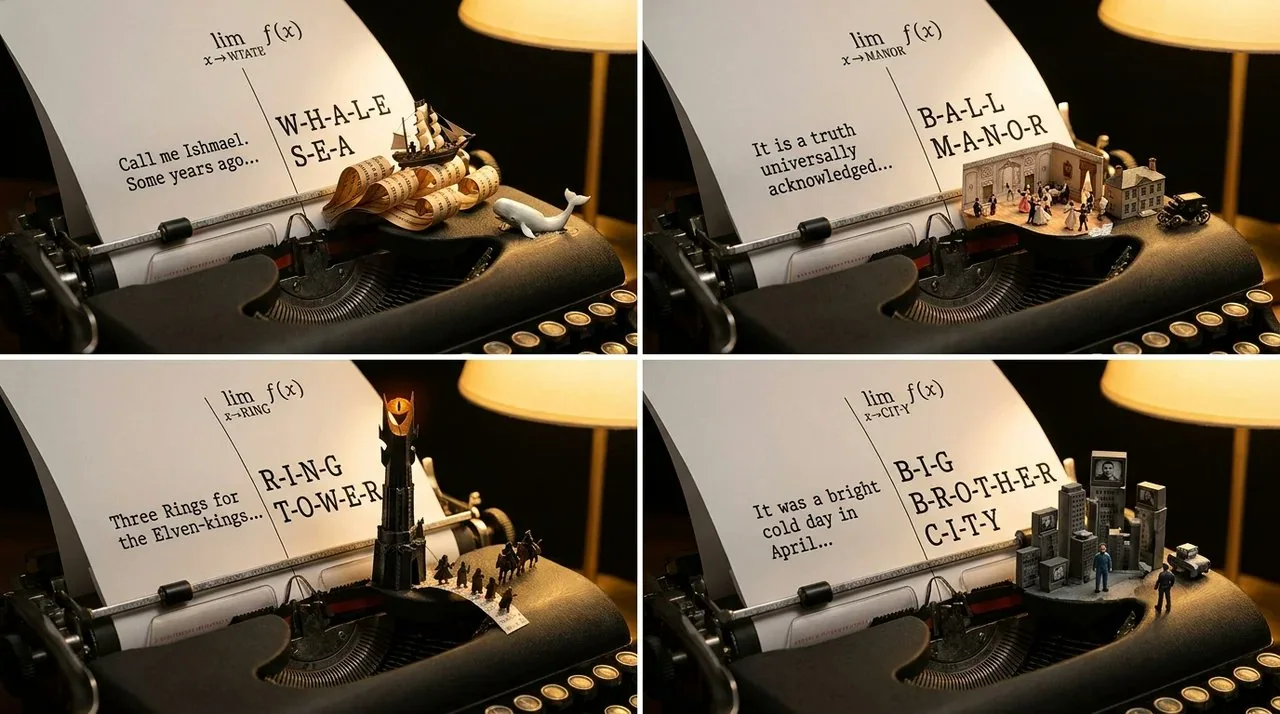
Case 12314
Mechanical typewriter leaps into a fantastical miniature world
2x2 grid, do this for famous novels: ƒ(x) = [VARIABLE_SUBJECT] lim (x → [VARIABLE_STATE]) ƒ(x) Variables: [VARIABLE_SUBJECT] = "AI-inferred black typewriter in an AI-inferred environment" [VARIABLE_STATE] = "$book's miniature world with vi

Case 13539
iPhone17Pro深夜床头私密自拍人像
Create image: use the attached image for facial reference with high precision apply hyper-realistic iPhone 17 Pro rear camera rendering while preserving exact facial structure and natural asymmetry. Maintain realistic proportion while enhan
Case 11