Case 13176
Chinese ancient painting restoration realistic photography prompt words
Prompt
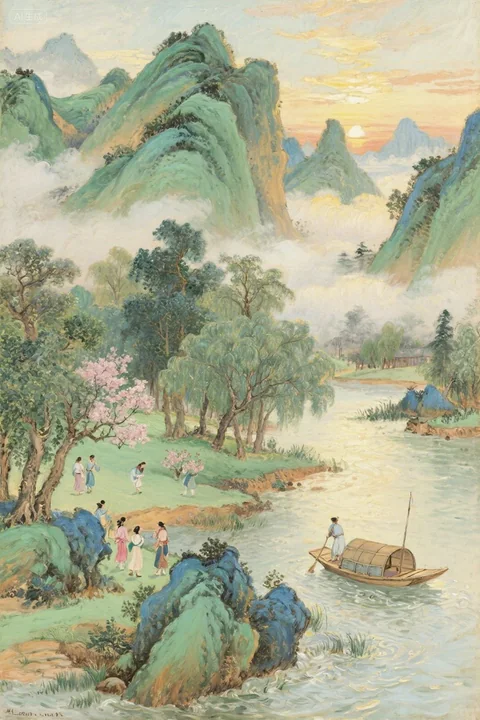
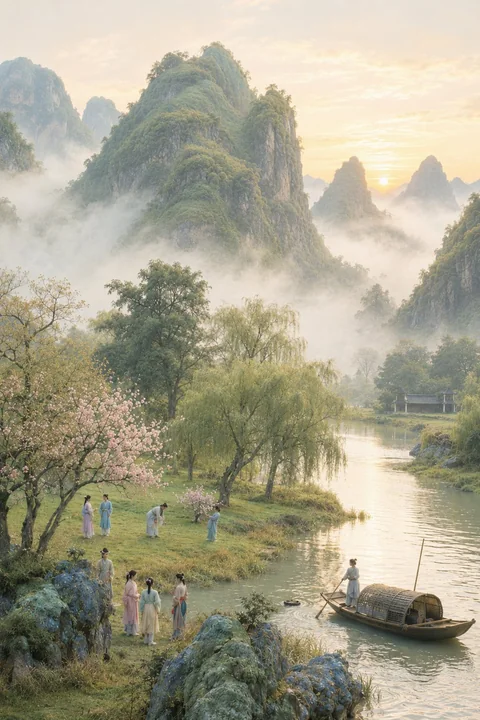
Based on the uploaded ancient Chinese painting, create a realistic, gallery-grade photograph as if captured by a top-tier photographer. Do not simply interpret this as “turning a painting into a photo,” nor continue the surface style of ink painting, fine-brush painting, murals, or religious imagery. Instead, treat the ancient painting as an ancient creator’s refinement, selection, compression, and reorganization of the real world, then reverse-restore it into the actual scene they truly saw at the time—as if a camera had existed in that era to capture this moment.

The final work should have the finished quality of an Oscar-level cinematic image: as if a Hollywood Oscar-winning director orchestrated the narrative, composition, rhythm, atmosphere, light and shadow, scene, and lens language with exceptional visual judgment; and as if top-tier cinematography, natural-light control, historical scene design, costume and prop design, set construction, and color grading all served the same visual goal, forming an award-worthy cinematic texture. But these are only backstage creative standards and aesthetic ambitions—absolutely no modern film-set elements may appear in the image: no director, photographer, lighting crew, staff, cameras, light stands, tracks, reflectors, monitors, traces of modern set-building, or artificial studio feeling. The image must look like a real historical moment captured by a top-end cinema camera, not like a modern crew in the middle of shooting.

First, truly understand the original work. Prioritize identifying the title, colophons, signature, seals, inscriptions, and any visible text, and combine these with traditional motifs, compositional order, object relationships, and the pictorial context to determine the subject accurately. Do not guess the subject merely from surface outlines. When dealing with freehand, splashed-ink, boneless, abstract, partial, or highly summarized works, first confirm what real object and scene they point to within the tradition of Chinese painting, to avoid misidentifying the subject.

After anchoring the subject, move into “source reality” restoration rather than continuing the “painting style.” Do not copy brushwork, and do not preserve paper texture, scroll texture, ink texture, or flat stylization as the visual skin. Instead, restore real mountains, plants, clouds, water, flowers, birds, people, utensils, architecture, climate, time of day, space, and distance. The brushwork, color application, blank space, rhythm, and spirit of the original are not the final style themselves, but clues for finding the real scene.

Please preserve the core spiritual structure of the original: relationships among objects, visual center of gravity, density and dispersion, the distribution of emptiness and solidity, the breathing room of blank space, the ratio of stillness to movement, and the directional flow of “spirit, energy, bone, and momentum”; but do not mechanically copy contours. Start from “how this subject actually existed in reality,” then let the order of the ancient painting constrain the generation of the image. The final image should not only restore, but become a true work of photographic and cinematic aesthetics: with a clear, strong, unforgettable visual core; with light, color, air, movement, or posture that could only exist in this exact moment; with director-level blocking, and a photographer’s deliberate choice of angle, distance, inclusion, exclusion, and gaze—not a flat, evenly spread, merely correct yet mediocre reconstruction.

The cinematic quality of the image must come from the real world itself, not from cheap filters or exaggerated effects. The scene should feel like it has been rigorously refined by the art department of a top-tier historical film: landforms, architecture, vegetation, objects, fabrics, roads, water flow, smoke, dust, seasonal traces, and signs of age must all feel naturally credible. Every detail should serve the subject, space, and emotion rather than pile up as decoration. Any sense of “set design” should disappear into realism, like an ancient world that already existed—not a soundstage built for filming.

Whenever figures, humanoid forms, Buddhas, bodhisattvas, arhats, deities, immortals, attendants, children, monks, court ladies, or recluses appear in the image, they should by default be restored as real living human beings unless the original clearly depicts sculpture, clay figures, stone carvings, gilt statues, devotional icons, or other physical statuary. They must not look ceramic, clay-like, jade-like, wooden, metallic, mural-like, or like flat sacred icons. Figures must have real skin, bone structure, volume, fabric, expression, posture, breath, spatial presence, and natural lighting relationships. Their actions, gestures, gaze, center of gravity, folds of clothing, and use of props must all fit both the original context and real-life logic; they must not look stiffly posed, like mannequins or dolls. If the original truly belongs to a statuary subject, then restore it faithfully as a real sculptural object, showing its material, mass, traces of age, and environmental lighting.

Color must be significantly elevated. Do not treat the colors painted by the artist as the only answer, and do not settle for ordinary natural color alone. The visible colors in the image should be understood in terms of what they emphasize; colors not explicitly painted should also be actively restored according to their latent logic. The original colors are a foundation, not a ceiling. Starting from the real world, rebuild the color relationships the scene should actually have had at that time, while integrating the presentation standards of top modern photography, cinema-grade optics, and Oscar-level color grading: better dynamic range, cleaner color separation, more delicate warm-cool transitions, richer midtones, more transparent atmospheric color, and more restrained yet sophisticated saturation control. Let the real-world colors of light, objects, environment, and air nourish each other with the color consciousness of Chinese painting, so the image remains faithful to the spirit of the original while gaining a higher-dimensional color expressiveness. Color must not be missing, rigid, dirty-gray, muddy, or dull and dark in a collapsed mass; it must be clear, transparent, vivid, delicate, breathable, and layered—like a world captured through a top cinema camera and premium cinematic lenses: clean blacks, clean highlights, high color purity without gaudiness, transparent air, layered depth, and an overall clarity that is luminous without feeling thin.

Light and shadow must become the core creative force of the image. Do not make the image flat just because the original painting does not clearly depict lighting, and do not use harsh, exaggerated, studio-style dramatic lighting. Based on the subject, temperament, sense of time, temperature, relationship between motion and stillness, and spiritual center of gravity in the original, actively seek the most suitable cinema-grade natural light: it might be thin morning light, twilight glow, diffuse light after rain, light piercing mist, reflections from water, snow bounce light, side light from a window, shafts through forest gaps, dim temple interior light, or soft light filtered by the atmosphere. The lighting should feel as if controlled at the highest level of lighting design, yet entirely hidden as naturally occurring location light. It need not be strong, but it must be masterful; it need not be loud, but it must have direction, layering, and breath. It must shape volume, awaken materials, build space, guide the eye, uphold the subject, and create truly elevated emotional tension. Great photography and great cinema cannot accept mediocre lighting.

Realism must come from a credible photographic situation: air, humidity, temperature, reflections, refractions, material textures, depth of field, distance, fine grain, edge falloff, and levels of detail must all work together convincingly. The lens language should have the deliberate selectiveness of cinema: appropriate camera height, focal-length compression or spatial openness, foreground-midground-background relationships, depth-of-field control, subject staging, lighting placement, and eye guidance should all serve the spiritual structure of the original. Avoid the feeling of a white-background specimen, floating subjects, CGI, plasticity, griminess, dull decay, fake HDR, fake depth of field, oversharpening, influencer filters, cheap “ancient style,” game concept art, or tourism-poster aesthetics. The image should be clean, transparent, and enduringly watchable, with a high degree of finish—not dirty, muddy, or pretentiously somber.

If the original contains colophons, inscriptions, signatures, seals, or written notations, please preserve and reintegrate them into the final image as much as possible. Prioritize retaining their recognizable content, writing direction, positional relationships, and overall atmosphere. If they cannot be fully deciphered, continue their literati inscription structure, blank-space rhythm, and expressive bearing, so they feel like a natural inscription added upon the completion of the work, coexisting with the photographic image rather than being a stiff post-production overlay. Do not retain any modern watermarks, encyclopedia labels, website marks, QR codes, modern signatures, or unrelated text.

By default, the image ratio should follow the ratio of the original image in order to preserve the breathing room, order, and visual center of gravity of the original composition. If the user specifies a different aspect ratio, follow the user’s request first.

The ultimate goal is not “a photograph that looks like Chinese painting,” nor “a realistic ink-style illustration,” but a truly restored view of the world before the ancient creator’s eyes—elevated through Oscar-level directorial consciousness, top-tier cinematography, historical scene design, natural-light control, and modern high-end optical aesthetics. It should be real, transparent, delicate, restrained, and credible, with non-mediocre light and shadow, non-mediocre color, clear atmosphere, memorable visual highlights, cinematic narrative tension, and collectible finish—as if the reality behind the ancient painting has finally been seen again, and photographed for the first time in the best possible way.
More prompts
Case 8314
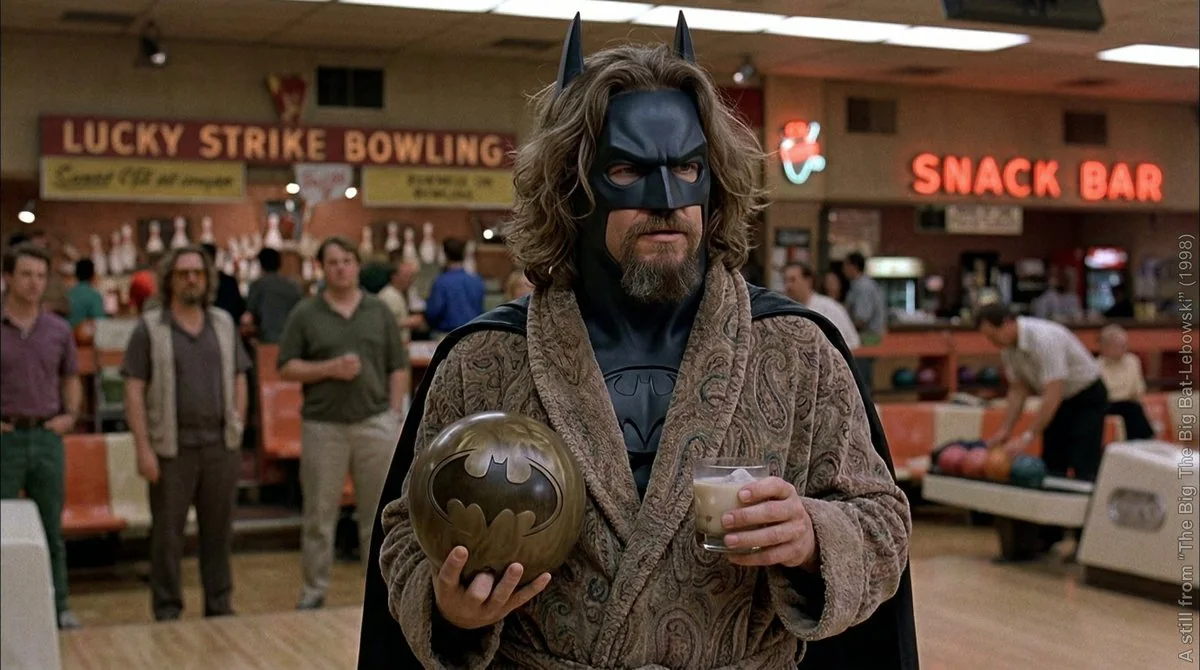
Batman guest appearance classic comedy movie screenshot
Screenshot from a well-known comedy movie, but it's Batman instead of the protagonist, dressed up to look like the main character and instantly recognizable.
反差萌喜剧恶搞蝙蝠侠截图
Case 4
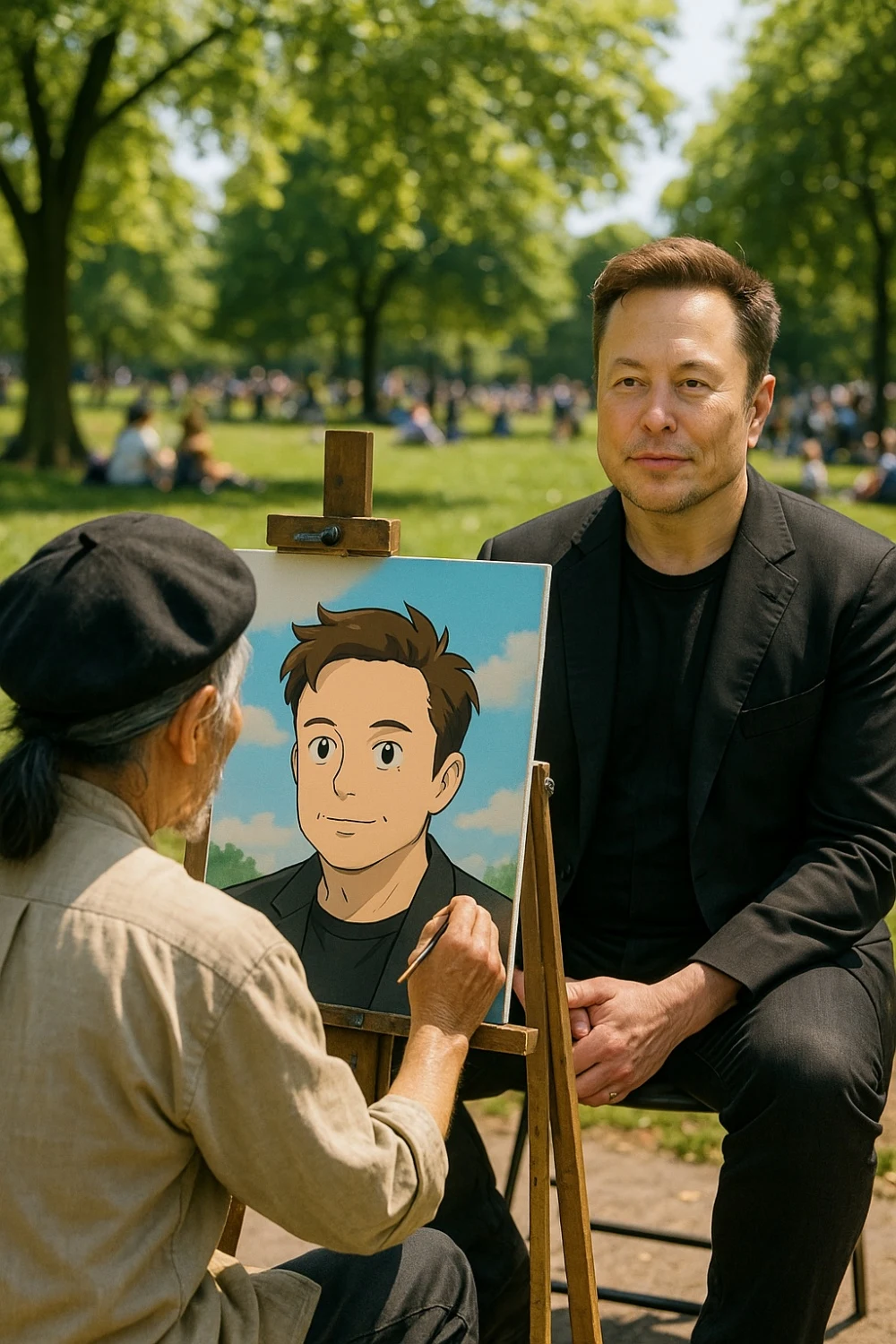
Musk is painting in the park.
Create a realistic outdoor scene where a Japanese painter is painting Musk. In the scene, the painter sits in front of an easel, while Musk sits across from him being painted (without any cartoon or anime style). The environment should be l
landscapecartoon